CodeTwo Email Signatures 365 integration with CRM systems
Problem:
You would like to use CodeTwo Email Signatures 365 to add email signatures to emails sent from well-established Customer Relationship Management (CRM) systems like, for example, Dynamics 365 or Salesforce.
Solution:
Emails sent directly from a CRM system (not composed in Outlook) can easily get cloud (server-side) signatures from CodeTwo Email Signatures 365, provided these emails are routed through Exchange Online and the CodeTwo cloud service, and your users are not impersonated by CRM in any way.
CodeTwo Outlook (client-side) signatures are added by the CodeTwo Web Add-in as you compose an email. That’s why, they can be added only if you send emails to your customers, leads, etc. from an Outlook app, while interacting with your CRM system through a dedicated CRM Outlook add-in.
Refer to the sections below to learn more details about how to integrate CodeTwo Email Signatures 365 with:
Tip
To learn more about signature modes in CodeTwo Email Signatures 365, see this user’s manual article.
Dynamics 365
There are two recommended methods to synchronize and track email conversations between Exchange Online (email system) and Dynamics 365: server-side synchronization and a dedicated Outlook add-in. You can learn more about them here.
If you want to add CodeTwo cloud signatures to emails sent directly from Dynamics 365, you need to set up the server-side synchronization. You also need to have at least one cloud (server-side) signature rule configured in CodeTwo software for your users working in Dynamics 365. Cloud signatures can be used with Dynamics 365 because they are added by the CodeTwo service after an email is sent from Dynamics 365 and after it goes through Exchange Online, but before it reaches a target recipient. For details on how to configure Dynamics 365 to work with Exchange Online email, refer to this Microsoft article.
Alternatively, you can choose the second method (Microsoft Dynamics 365 App for Outlook) to send emails from an Outlook email client (Outlook for Windows, Outlook for Mac, Outlook on the web), not from the CRM interface. In such a case, you will be able to use both CodeTwo cloud signatures (as described in the previous paragraph) or Outlook signatures (you need to deploy the CodeTwo Signatures Web Add-in for Outlook). Note that to deploy the Dynamics 365 Outlook add-in, you need to first configure server-side synchronization (see the previous paragraph) and grant your CRM users the relevant privileges.
Salesforce
If you want to add CodeTwo cloud signatures to emails sent directly from Salesforce, you need to have at least one cloud (server-side) signature rule configured for your Salesforce users and adjust settings in Salesforce’s Setup menu by following the steps below:
- Go to the Send through External Email Services setup page and enable the Send through Office 365 option (Fig. 1.).
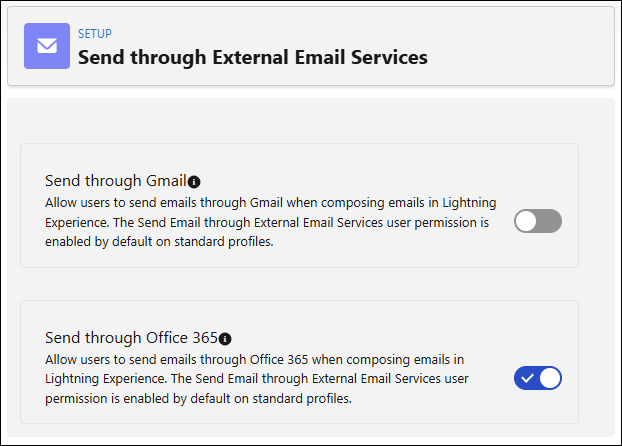
Fig. 1. Setting up Salesforce to route emails through Exchange Online (Office 365).
- Go to the Email Relays setup page, click Create Email Relay, and configure the new relay as follows:
- In the Host field, enter the IP address of the CodeTwo cloud service. This address depends on the Azure region you chose when deploying CodeTwo Email Signatures 365 in your organization. To get the IP address that applies to your Azure region, contact CodeTwo Customer Success Team.
- In the Port field, enter 25.
- In the TLS Setting field, select Preferred.
- (Optional) Adjust the Enable SMTP Auth setting, if necessary.
Next, click Save to confirm your changes.
Important
If the Email Relays feature is not available in Salesforce for your organization, you can request its activation by creating a case with Salesforce Customer Support using a System Administrator account.
If you are on a Signature Success Plan, you can do this directly via the Create a Case button on the My Cases page. If you’re on a Standard or Premier Success Plan, you can open the case through Agentforce (or you’ll be transferred to a support agent).
The case should include the following details:
- The ID of the organization for which you want to enable the feature. Learn how to find your Salesforce Organization ID
- The text “Allow Email Relay Enablement.”
- Your business case, for instance, “I need to activate the email relay feature to automatically sign emails generated in Salesforce using my company’s email signature solution.”
Learn more on how to get support from Salesforce Customer Support
- Go to the Email Domain Filters setup page, click Create Email Domain Filter, and configure the new filter as follows:
- In the Sender Domain field, enter the IP address of the CodeTwo cloud service (the same address you entered as the Host in the email relay’s settings).
- Keep the Recipient Domain and Email Relay properties unchanged.
- Activate the email domain filter using the Active checkbox.
Next, click Save to confirm your changes. Now, your emails generated in Salesforce will be relayed to the CodeTwo service.
Alternatively, if you use the Salesforce add-in for Microsoft Outlook to send emails from an Outlook email client (Outlook for Windows, Outlook for Mac, Outlook on the web) rather than from the CRM interface, you can use either CodeTwo cloud signatures (as described above) or Outlook signatures (after deploying the CodeTwo Signatures Web Add-in for Outlook). Note that to use the Salesforce Outlook add-in, you need to first enable Outlook integration in Salesforce, as discussed here.
Other CRM systems
In case of other CRM systems or your custom CRM system, the possibility to use email signatures added by CodeTwo Email Signatures 365 depends on configuration and features offered by the CRM that you use. For information about each signature type support, refer to an appropriate section below:
Cloud (server-side) signatures
To be able to use CodeTwo cloud signatures, your CRM must handle mail flow in the following way:
- Emails sent from your CRM system must be routed through Exchange Online (and the CodeTwo cloud service).
- The address in the Return-Path header of these emails must be the actual email address of your user. It cannot be a custom email address assigned by the CRM system to your end user.
Outlook (client-side) signatures
If there’s a dedicated Outlook add-in available for your CRM that allows your users to send emails from an Outlook email client (not from the CRM system), you will be able to use CodeTwo Outlook signatures after deploying the CodeTwo Signatures Web Add-in for Outlook.
Tip
Since all email correspondence is handled in an Outlook email client, users working with a CRM add-in can, in fact, use any type of email signatures added by CodeTwo (cloud or Outlook) – just like with emails that are not tracked by CRM.
See also:
| Related products: | CodeTwo Email Signatures for Office 365 |
| Categories: | FAQ |
| Last modified: | September 15, 2026 |
| Created: | August 8, 2023 |
| ID: | 1044 |






