How to avoid problems with base64 images
Problem:
You are trying to use base64 images in your email signature. Unfortunately, you find these images broken in your email app, messages with this signature are blocked by an antispam or antivirus tool, or the following error occurs when you insert the signature with CodeTwo Signatures Web Add-in for Outlook:
Your signature could not be inserted. Try again. If the problem persists, contact your organization’s administrator.
Solution:
Base64 encoding allows you to turn different types of data (images included) into a readable string. Then, the string can be embedded directly in your code (e.g., the HTML code of your signature). The main advantage of such an approach is that the data doesn’t have to be fetched from external resources because it’s already there – in the code.
However, the support for base64 images varies across different email apps. For instance, Gmail doesn’t support base64-encoded images and fails to display (render) them. Additionally, if base64 images are embedded directly in the HTML code of your signature (for instance, as data:image/png;base64,… data URIs), a message with this signature might be blocked or quarantined as potentially suspicious by your recipient’s antispam or antivirus solution (such as Sophos).
Technically, base64-encoded images are supported in all signature modes in CodeTwo Email Signatures 365 (you can insert them manually into your HTML code). Because of the abovementioned issues, however, the best idea is to embed your images when designing a signature template in the editor. This method has been proved to work on various platforms and with a number of different email apps.
To embed an image in one of the supported formats (PNG, JPEG/JPG, or GIF) in your signature template, simply click the Picture button on the editor’s ribbon, select the Embedded picture option, and choose your image file (Fig. 1.).
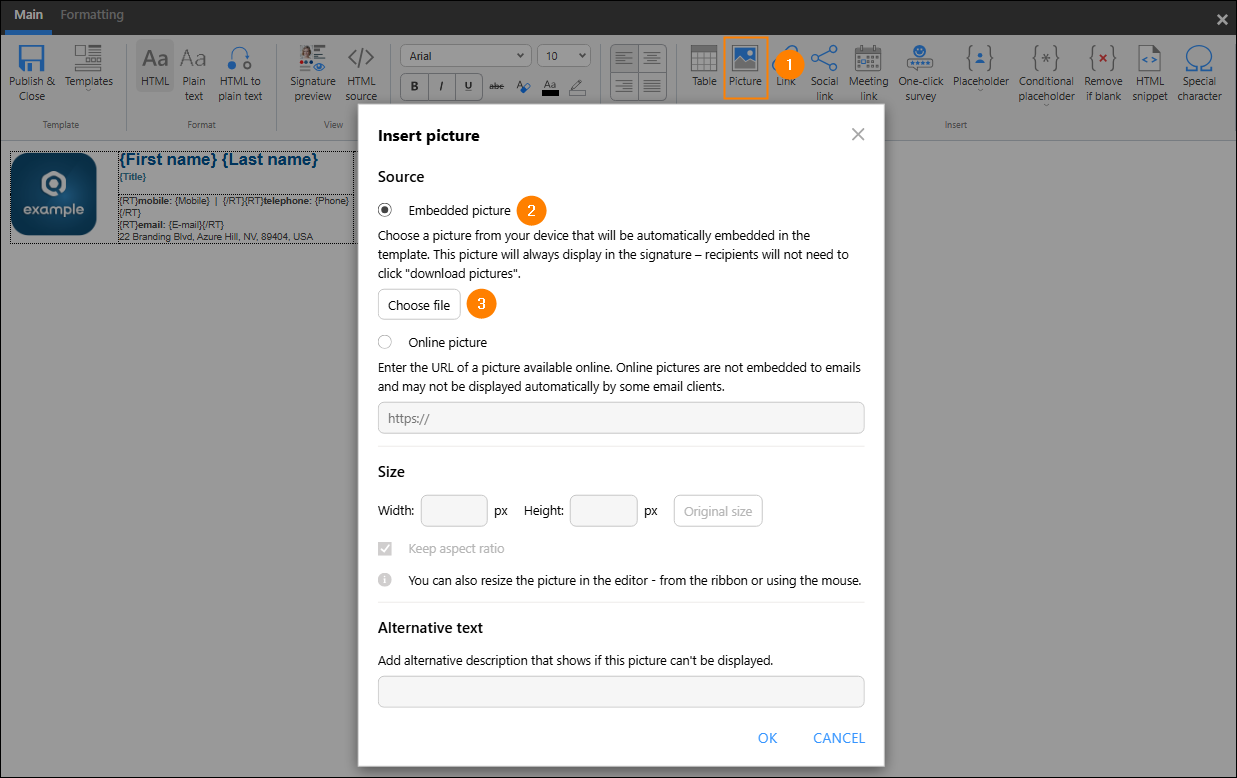
Fig. 1. Adding an embedded picture to your email signature.
With images embedded that way, you both avoid issues related to using base64 encoding, and your recipients no longer need to click any ‘download pictures’ (or similar) button.
See also:
| Related products: | CodeTwo Email Signatures for Office 365 |
| Categories: | Troubleshooting |
| Last modified: | December 5, 2025 |
| Created: | March 1, 2022 |
| ID: | 978 |






