Migrate Exchange 2013 directly to Exchange SE with CodeTwo Exchange Migration
If you want to migrate from Exchange 2013 to Exchange SE using the native migration solution, you first need to move to Exchange 2016. This is because Exchange 2013 and SE cannot be deployed within the same Active Directory forest. However, we have a perfect solution that does not require performing the double-hop migration via Exchange 2016.
CodeTwo Exchange Migration is a specially designed tool that allows for direct migration from Exchange 2013 to Exchange Server Subscription Edition (SE). With easy-to-use graphical interface and fully automatic setup features, CodeTwo Exchange Migration significantly reduces the time needed to perform full and smooth migration between two on-premises environments. You also don’t have to upgrade Exchange 2013 to 2016 anymore.
Key features:
- Direct migration from Exchange 2013 to Exchange SE
- Easy cross-forest migration of Exchange Server mailboxes
- Full availability of mail server during the migration
- Public folders migration
- Automatic matching of source and target mailboxes
- Target mailboxes created on the fly in the program
- User-friendly server connection and migration job configuration wizards
- Migration reports
- Time and folder filters for migrated items
- Self-service application
- Free technical assistance during program configuration
How does it work?
CodeTwo Exchange Migration is a self-service and user-friendly application that deals with Exchange migrations. It doesn’t require any additional assistance of 3rd party services throughout the process of deployment and use. An admin operating the program is in full control of the data transfer during migration. The installation process is very straightforward: simply deploy the program on any computer within the source Active Directory domain.
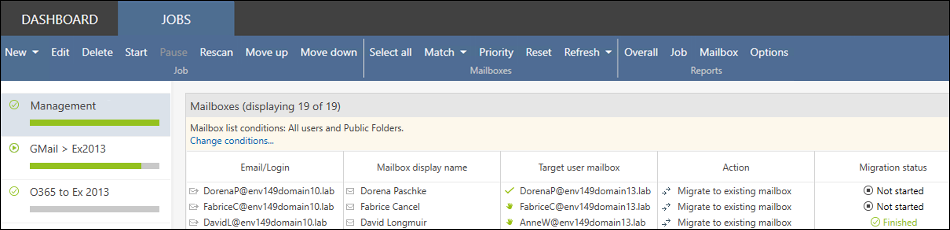
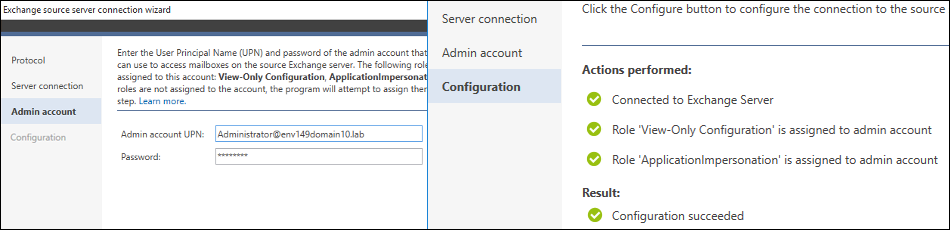
In order to begin a cross-forest migration, the application needs to establish connections with source and target Exchange Server domains by using dedicated configuration wizards. It will also run a few checks to assess the readiness of both machines.
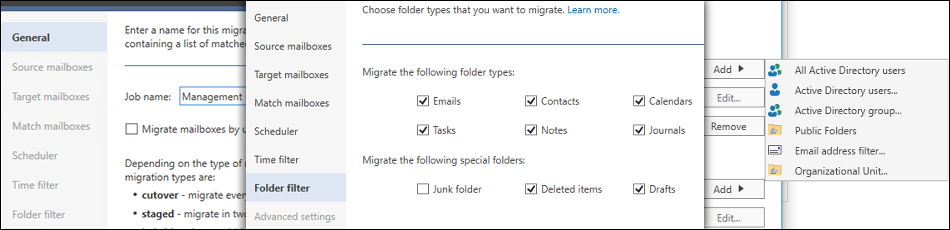
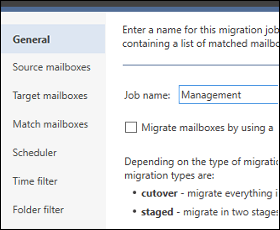
The program uses jobs to migrate data. A migration job is a task in which you select source and target environments, add users’ mailboxes that need to be migrated, specify the type of folders you want to include in or exclude from the migration process, or apply a time filter so that only items of a certain age are moved.
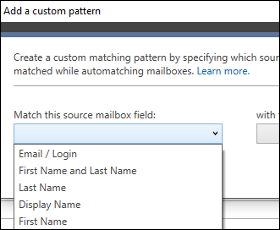
While pairing users’ mailboxes, you can use the Automatch feature, which automatically matches mailboxes from the source server with those from the target one. This feature relieves the administrator of the necessity of matching mailboxes manually. The matching is performed according the {first name} {last name} or {display name} pattern, or a custom pattern created by the admin.
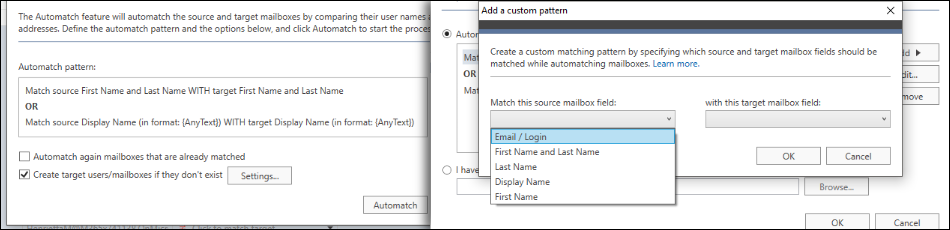
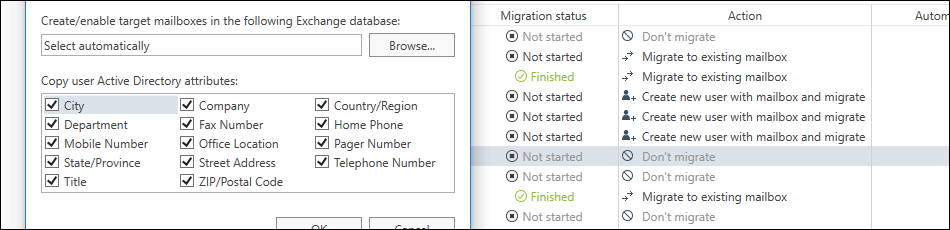
If CodeTwo Exchange Migration fails to find matching mailboxes on the target server, you can create them automatically in the program. Target mailboxes are created according to settings used in the Create target users/mailboxes window.
The program has a built-in Scheduler that can be used to automate the entire migration process. After completing the configuration of a migration job, you can start the migration immediately or take advantage of the scheduler that will start and stop the job according to your preferences.
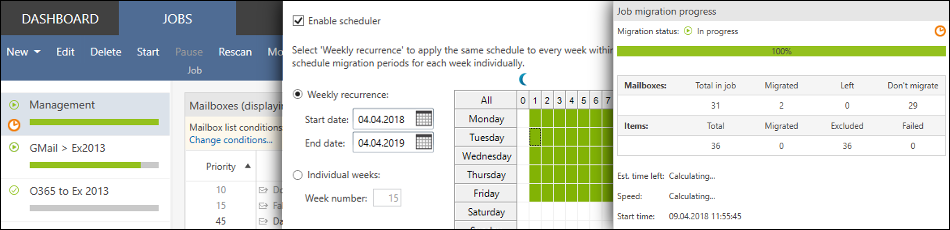
CodeTwo Exchange Migration is programmed to create copies of mailboxes in the target Exchange SE organization by using the data from the source Exchange 2013. The application doesn’t remove any data; it just performs data replication to the target location. You can monitor the migration progress on the program’s Jobs tab or by generating one of the available migration reports that include the summary of actions performed on a single mailbox, all mailboxes from a single job, or for all jobs. CodeTwo Exchange Migration aims to provide smooth and safe migrations of mailboxes with full availability of the mail server during the process (users can use their mailboxes during the migration).