Examples of practical application
CodeTwo Public Folders enables users to share Outlook data in real time. It combines the functionality of Outlook with joint access of multiple users to the same data, the result of which are completely new possibilities for teamwork.
Each business or organization has individual and unique procedures for teamwork and will utilize CodeTwo Public Folders in a different way and in accordance with their needs. Below you will find only some examples of its applications:
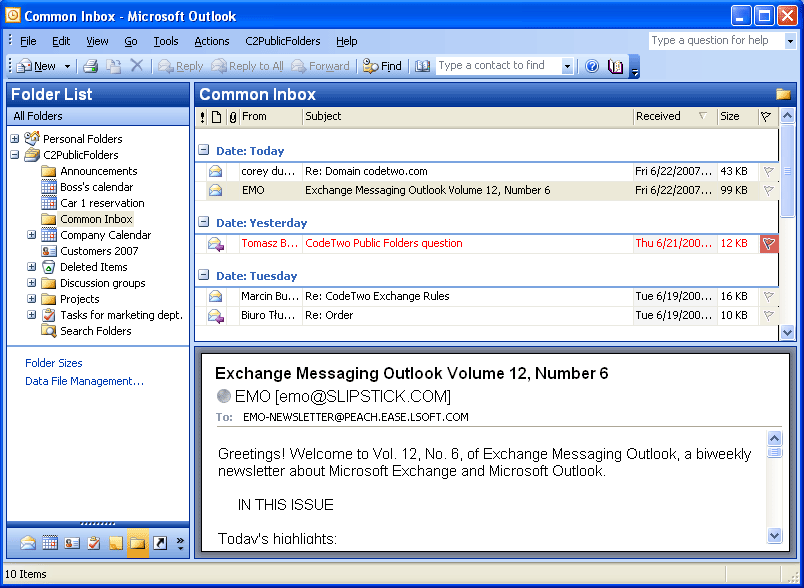
Sharing company mail
Frequently, the mail that is received (or sent) by a company needs to be accessible by multiple users. For instance, in a company that receives orders by e-mail, owing to CodeTwo Public Folders each order can be processed by any employee, depending on their availability at the moment.
In this case, Outlook's rules can be used to direct mail to appropriate shared folders, depending on the
sender's or recipient's address or other attributes. Each group of employees check their individual folder
for orders. When a new order is received, one of the employees starts to process it. At the same time, it is
marked as "pending" or forwarded to a different folder in order to inform relevant co-workers.
This solution helps to distribute customer service and orders between employees. It is no longer a problem to track the order and see who it is being completed by.
Sharing of mail can be done using Outlook's rules, which will copy the messages to selected public folders, or directly by sharing the personal folder in the Inbox.
See also Creating a common inbox and outbox.
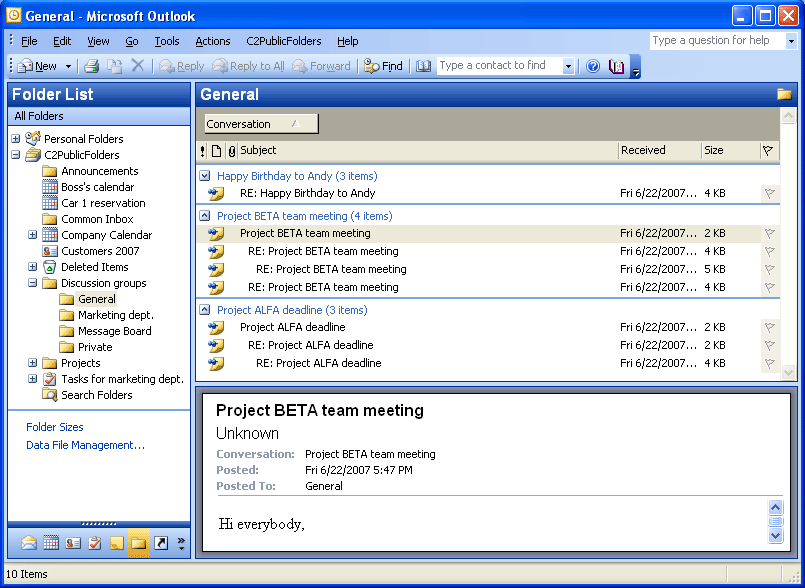
Message board - discussion group
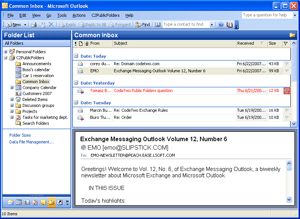
Using the structure of public folders you can create a virtual messaging board
in the company. Folders can be divided by topics. An employee creates a message in a public folder if s/he wants
to share it with his/her co-workers. Replies can be posted directly in the public folders - this way it is possible to develop different discussion groups inside the company.
Public resource booking
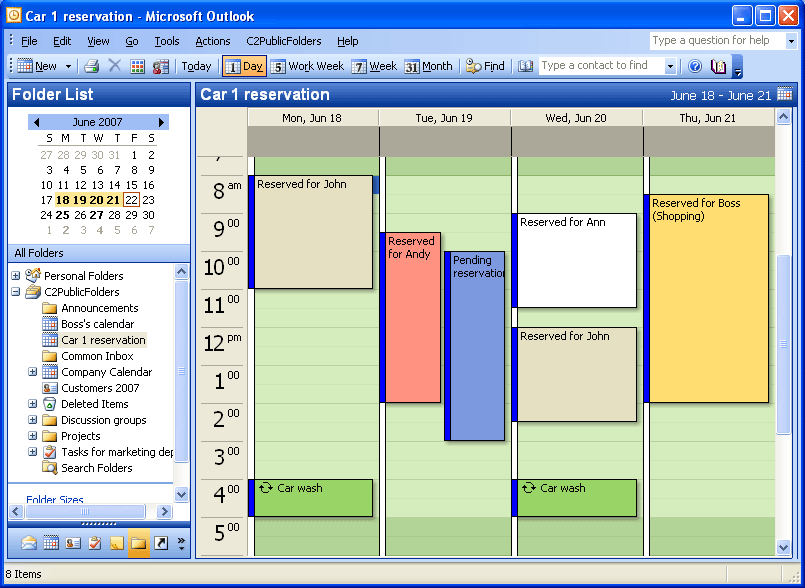
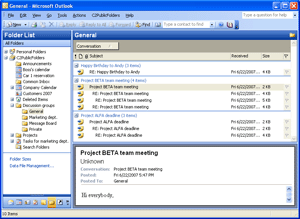
The public calendar in Outlook can represent a resource used in the company by many people (e.g.: a car).
Creating a fixed date in the calendar means the car is booked for a certain period. The data can in a detailed
way describe who is booking the car, what for and for how long. The administrator can set access rights for
the resource folder, so that users cannot delete bookings created by other users. Owing to this, every
employee knows exactly when the resource is going to be available and can plan his/her timetable accordingly,
maximizing the resource utility. Due to the fact that bookings are made in one place in public folders
and not scattered on the entire network, it is possible to create views in Outlook, or even personal software,
reflecting resource utilization and occupancy extent.
The option in which the user/administrator can manage access rights to shared folders
enables setting the rules so that users cannot edit the content created by another user. They will, therefore,
have no right to delete or alter previously made reservations. CodeTwo Public Folders provides an opportunity to
have an efficient reservation and resource management tool directly in Outlook, which constitutes a friendly
and very well-known application to most company's employees - there is no need to buy entirely new software
suite.
Another example of possible application of public calendars as a system of appointments and bookings can be
found in doctor's offices and garages. A separate calendar can be attributed to each doctor or mechanic.
Group schedule
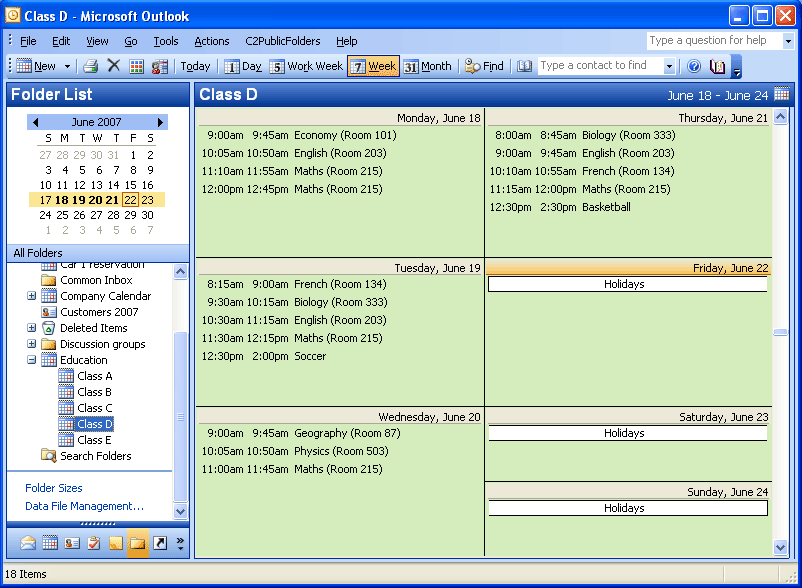
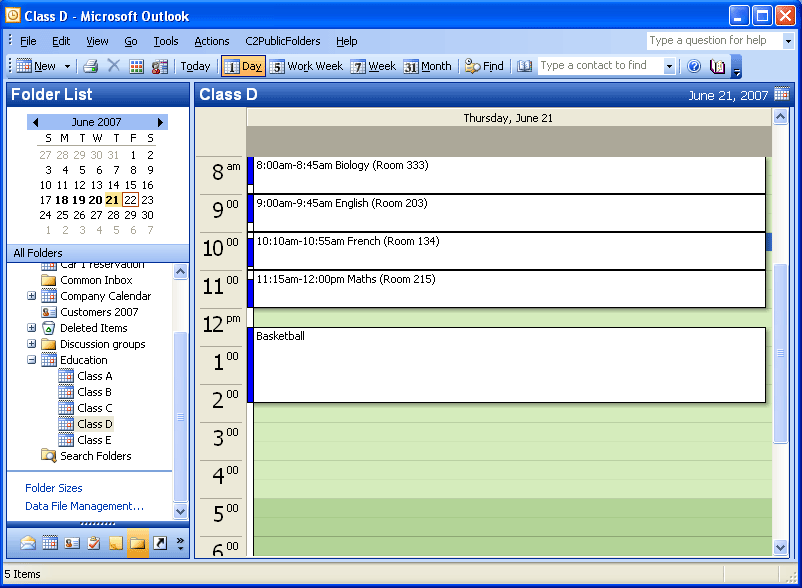
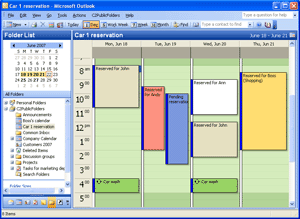
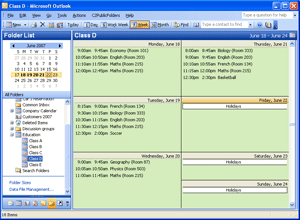
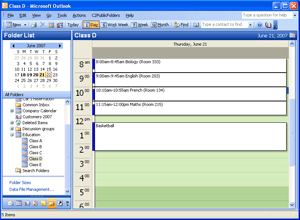
Public calendars can display the schedules and the descriptions of employee activities. A good illustration parallel to this feature would be a school timetable for individual classes. In this case, every calendar represents a timetable for a group of students - one class. As a result of placing all data in one public folder, every member of the group is able to view the timetable.
Boss's calendar
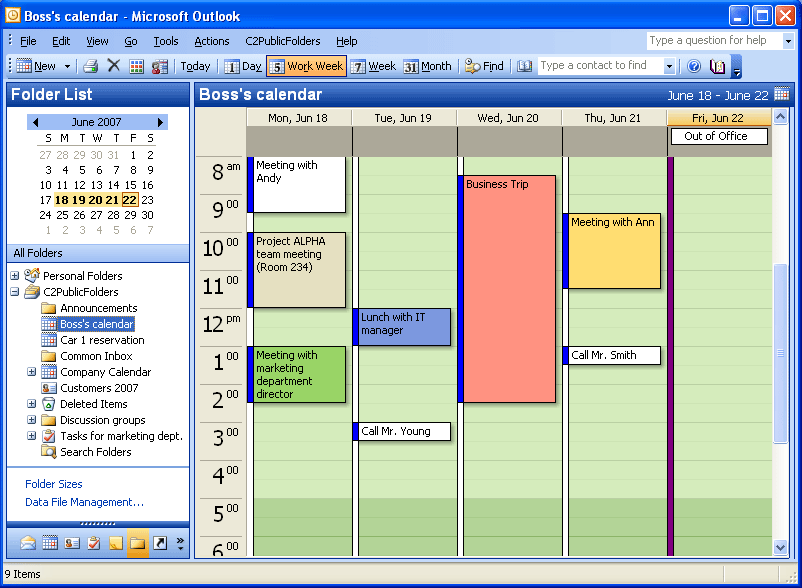
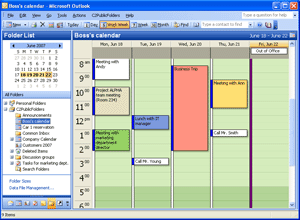
CodeTwo Public Folders provides an ideal solution for a secretary who organizes meetings and daily schedules
for the boss. The boss shares his/her personal calendar in Outlook, and the secretary makes relevant changes
in it from another computer. A shared calendar will considerably facilitate their work - new meetings are
mainly created by the secretary while the boss has the right to track them and introduce necessary changes.
Each change to the calendar is instantly visible to the boss. The use of CodeTwo Public Folders does not change anything
in the usual functionalities of Outlook such as reminders, organizing meeting, synchronizing data with PDA or telephones.
Moreover, the boss, as the owner of the calendar, can mark some elements as "private"; they will not be
visible to the secretary, even though she enjoys full access rights to the boss's calendar.
The above scenario for the calendar can work equally well for other types of folders such as: contacts, mail, tasks, journal, and even notes.
Employee availability register
Public calendar can also be used as a folder, where employees enter their presence or absence from the office. They can record their working time, absences caused by business factors or leave, and also mark their future holidays. Due to such solution, the Team Manager can instantly watch who is present at the moment and what task is being performed by him/her. This enables appropriate planning of employees' activities and helps in project management.
Access rights for shared folders can be set in such a way that respective
employees cannot see one another's calendars. All calendars of these employees will be seen by the person
in charge of their attendance in the office.
Company contact base
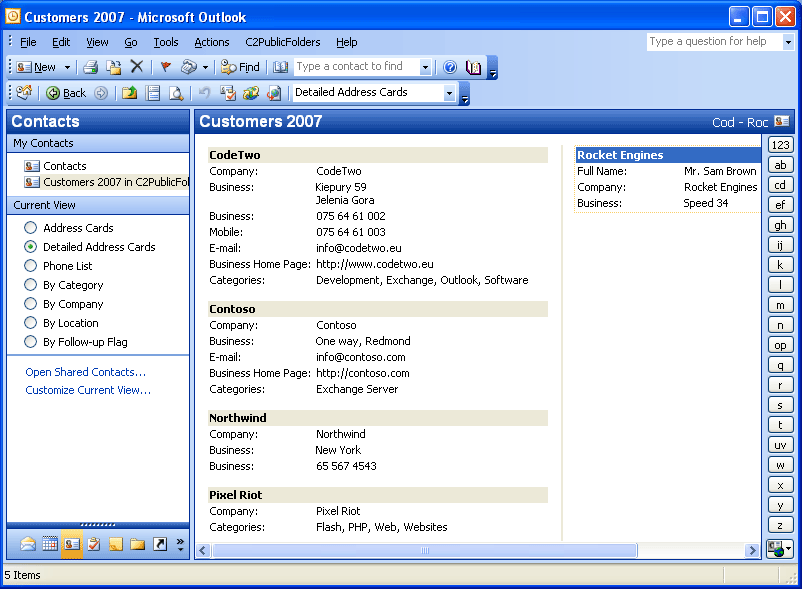
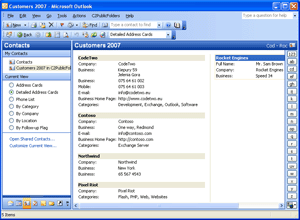
By using the Common Contacts folder, it is possible to create a global company contact list available for all
employees. This way when the new clients' contact details are added, they immediately become available for the
rest of the employees in the company or in its branch. Depending on the manner of organizing data in
the company, contacts can be grouped accordingly using folder hierarchy.
This solution is somehow similar to storing data, for example in Access, but it offers many additional benefits, such as the clients' details appearing directly in Outlook. It enables, for example, simplified sending of promotional e-mails to the groups of recipients, classifying customers, easy data searching and using the Outlook's advanced built-in methods of displaying contacts in Outlook.
CodeTwo Public Folders will work equally well as a shared contact database in a company whose representatives
are frequently away from the company. They will work on laptops with no connection to the company's network.
The option to work in offline mode will let them access shared data in Outlook outside the company. The new data they
input or the updated client details will automatically be synchronized with the network computers as soon as
they return to the office and re-connect to the local network.
Global company address book
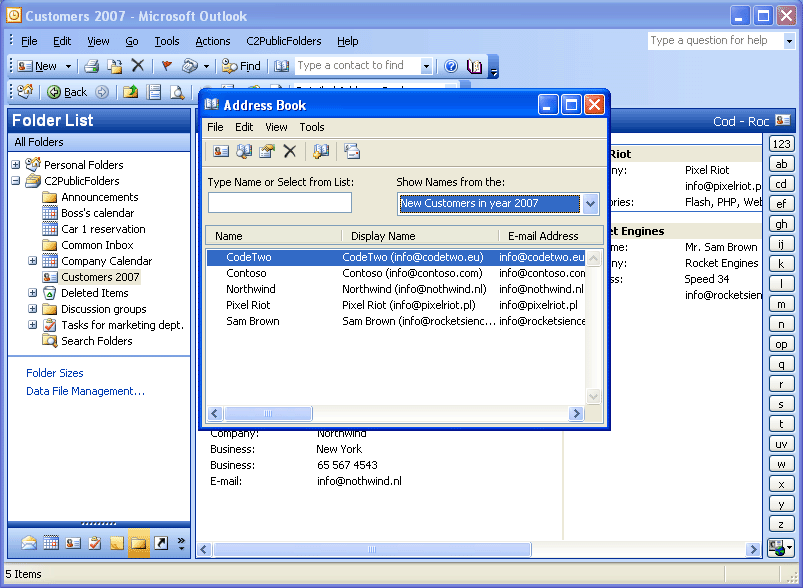
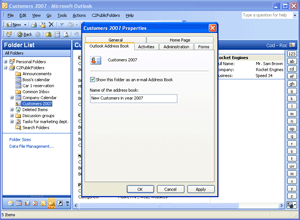
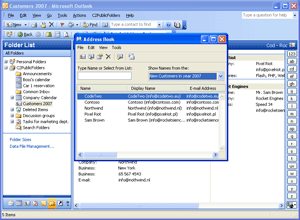
By using public folders with contacts, explained in Company contact base, employees can use
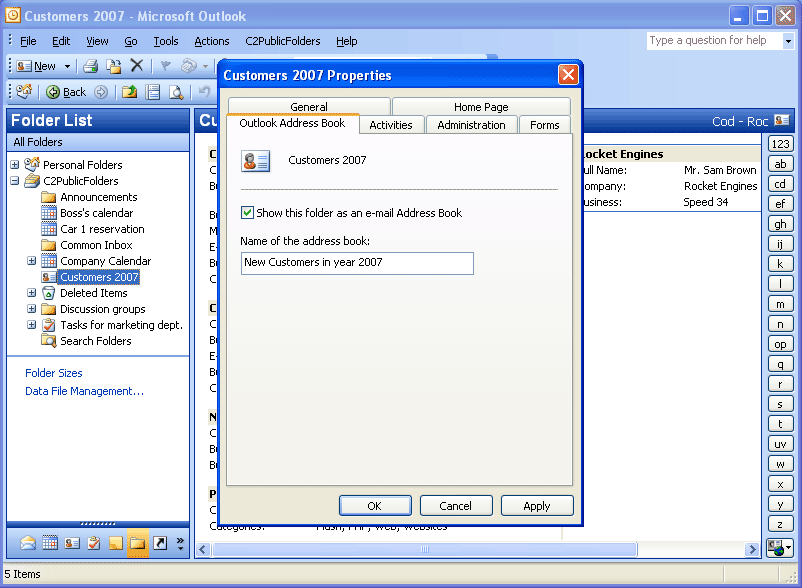
the contacts directly in their Outlook address book. In order to do that, they have to choose the
Show this folder as an e-mail Address Book option in the folder properties that can be found in the Outlook Address Book tab. From that moment, contacts from the folder will be displayed in the user's address book and he will be able to send e-mails to the selected people in a simple manner.
Delegating tasks
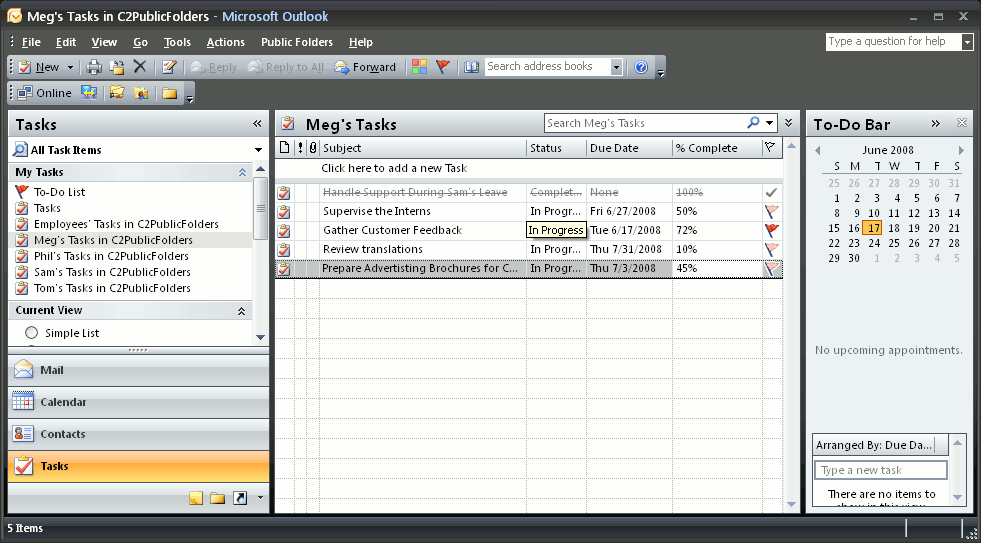
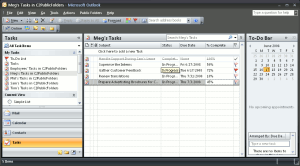
CodeTwo Public Folders helps the manager to delegate tasks to his/her team. Each team member has to grant
the manager access to their personal task folder. The manager will now
be able to create new and supervise the existing tasks directly in these employees' folders. Of course,
simultaneously a new public folder can be created to include shared goals for the whole team.
Project Management
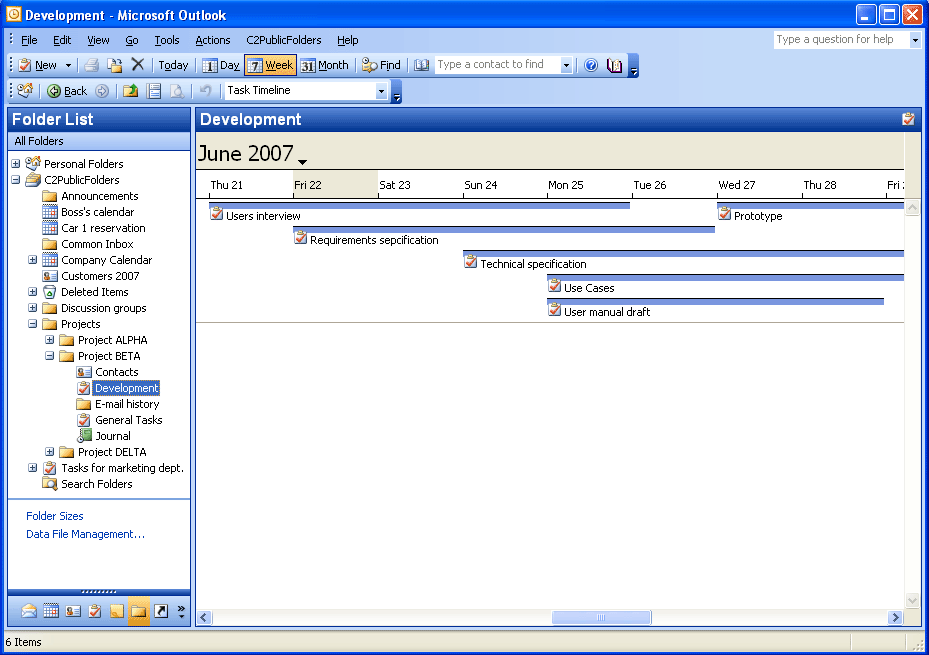
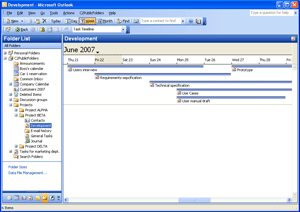
By assigning a public task folder to every project, a coordinator can define tasks concerning the project
carried out by him in one place. The task can contain a detailed description, the name of the person
responsible for it, due date, priority, percentage of completion, etc. Furthermore, you can define other
folders of different type, containing variety of data concerning the project: the project calendar, related contacts
or correspondence history regarding the project. The employees performing the task can define the current stage of its completion in Outlook, which enables the coordinator to plan, control and optimize work.
Share document libraries
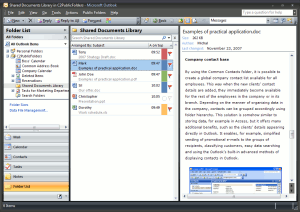
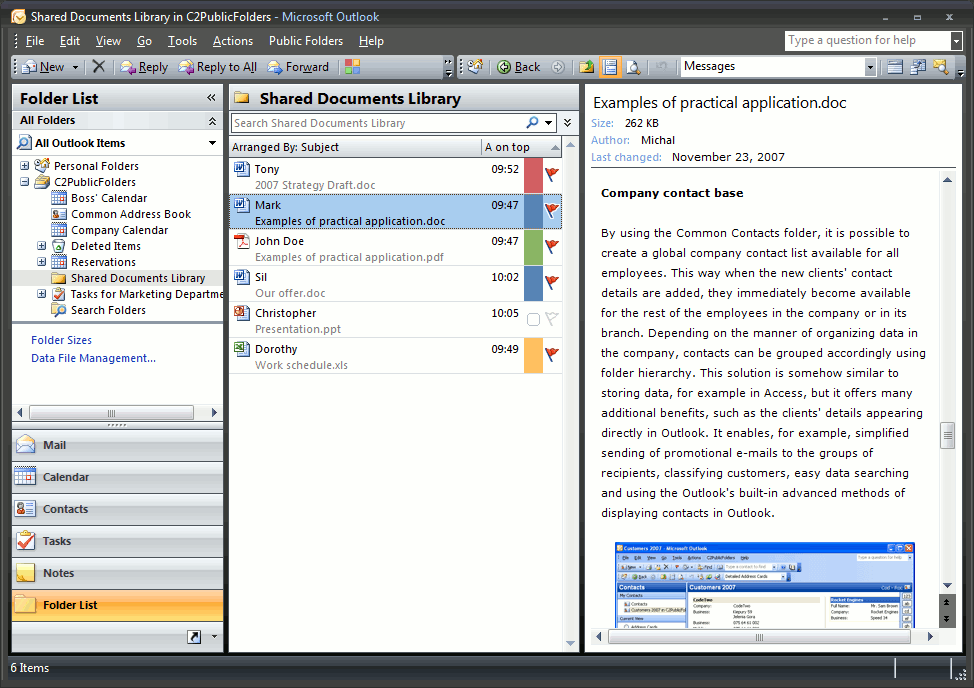
Users have an opportunity to keep and modify a shared library of documents in Outlook. This will primarily include Office documents (Word, Excel, PowerPoint) as well as PDFs.
Documents can be created in Outlook by dragging them from a disk and dropping into a public folder of the "Mail" type.
In contrast to attachments, users can make changes to the documents directly in Outlook and the changes
will immediately be visible in public folders for other users.